Policy in practice
What Europe’s infrastructure strategy means if you run a lab
A reading of the EU strategy on research and technology infrastructures and the new Charter of access, for the people who manage shared equipment.
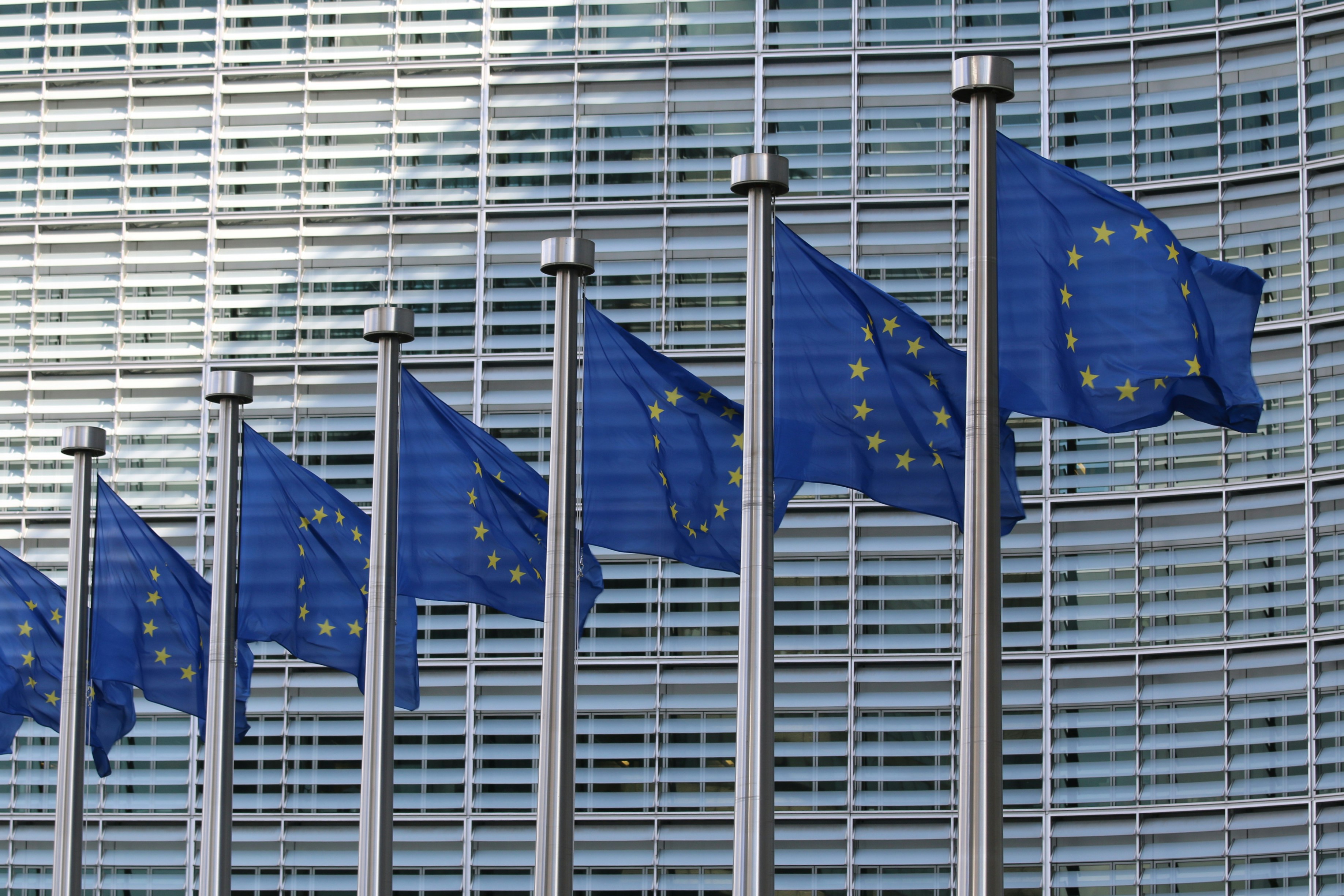
In September 2025 the European Commission adopted a strategy for research and technology infrastructures. It covers everything from synchrotrons and biobanks to cleanrooms, pilot lines and testbeds, and on 28 July 2026 it was followed by a Charter of access for industrial users. We read both with one question in mind: what changes for the people who actually run these facilities?
The short version is that Europe wants its shared equipment to be used by more people, and by other people than today. Most of the work that follows from that ends up with lab and facility managers, which is why we think the documents are worth an hour of your time.
What is in the strategy
The Communication lists 22 actions, grouped under capacity and investment, access, talent, governance and international cooperation. Many are aimed at governments and funders. A few will be felt in individual facilities. From 2026 the Commission and the Member States will map infrastructure capacity across Europe and use that picture to draw up joint investment roadmaps. Also from 2026, pilot schemes will give startups and scaleups access to technology infrastructures, and from 2027 cross-border access schemes will be tested in fields such as advanced materials, clean energy, quantum, AI and biotechnology.
The amounts involved explain the urgency. The current ESFRI roadmap stands for more than €25 billion in investment and over €2 billion a year in operating costs. For technology infrastructures, a study cited in the strategy estimates that research and technology organisations will need €13-16 billion in capital investment by 2030, roughly three times what they spent in the previous five years.
The Commission is also candid about what goes wrong today. Researchers and companies are kept out by complicated procedures, high costs and the simple fact that they do not know a facility exists. Capacity is unevenly spread as well. A quarter of the EU’s cleanrooms are found in just five regions, two of them Dutch (Limburg and Noord-Brabant).
The Charter turns the access chapter into something a facility can sign up to. It sets out six principles: visible services, transparent quality, simple contracts, safe handling of intellectual property, tailored support for companies, and cooperation between infrastructures. Endorsement is voluntary and has no legal consequences.
What changes for a facility
None of this is binding on an individual lab. It does describe where funding and expectations are heading, and it raises a few practical questions that are easier to answer before the first external user is at the door.
The first is access. Someone from a startup or a foreign institute has not had your induction and does not know your house rules. You need a way to give that person access to specific machines for a limited time, after the right training, without it depending on one technician who happens to be in that day.
The second is cost. A transparent service offer means a price list, and a defensible price starts from what a machine costs and how much it is really used. For publicly funded facilities there is a State aid angle too. Work for companies counts as economic activity. It can stay outside the State aid rules as long as it remains ancillary, which the Commission puts at no more than 20% of annual capacity, and it should be charged at a market price and kept separate in the accounts. That is hard to demonstrate from a booking calendar, since booked hours and used hours tend to differ. The strategy promises further guidance on these rules for public research organisations.
The third is traceability. Companies bring confidential samples and their own IP, and the strategy notes that access to facilities working on critical technologies needs to be managed with care. In both cases you will be asked who used which machine, when, and on whose authority.
The last is capacity. Once the mapping exercise starts, facilities will be asked what they have and how intensively it is used. Those with measured utilisation figures can show where there is room for outside users, and can back up a request for new equipment with something better than a waiting list.
Where to start
You can prepare without waiting for a European programme. Start by measuring real use per machine, because pricing, invoicing and investment cases all depend on it. Write down which training each machine requires, so that admitting a visiting user becomes routine. Record for every session who it was for (user group, project, cost centre), which gives you the split between research and industrial use when someone asks. And publish what you offer, with conditions and prices, so that a company can find you without knowing someone on the inside.
Then read the Charter itself. Endorsing it puts your organisation on the Commission’s public map of facilities that are open to industry. Whether you sign or not, the six principles are a useful checklist for the conversation with your own management about external users.
Why we welcome this
We have written before that we believe in ecosystems. Research moves faster where people share equipment and run into each other, and this strategy applies that idea at European scale. So it will surprise nobody that we are in favour.
There is a simple argument of fairness as well. A lot of this infrastructure was paid for with taxpayers’ money. We find it normal that more people get to use it, and that the people who fund it get a clear picture of how well it is being used.
We also expect it to pay off. A startup that can book time on equipment it could never afford to buy can do research at a level that used to be reserved for large companies and institutes. Some of those startups will become the scaleups and breakthrough companies of tomorrow. Along the way, people from different organisations meet around the same machine, and those contacts grow into knowledge networks that are hard to organise from the top down.
That leaves the question of scale. Why would we compete with each other as small regions? No single region has the equipment, the people and the money to do this alone. We would rather see Europe work together, with a plan, and become a powerhouse in research and technology.