Collaboration as an engine for innovation
Why research collaboration needs operational infrastructure, not just good intentions
Thriving ecosystems of innovation are not a coincidence, they are the result of planning, vision and execution.

Research breakthroughs rarely happen in isolation. They happen when people share equipment, exchange methods, and solve problems across disciplinary boundaries. The most productive labs, institutes, and research ecosystems in Europe have one thing in common: they made a deliberate choice to build the conditions for collaboration rather than hoping it would happen on its own.
That choice is becoming more urgent. And more difficult to sustain without the right operational foundation.
Volatility is the operating environment now
Supply chains have fractured. Geopolitical shifts are redirecting decades of scientific cooperation. AI is transforming which skills matter and how fast knowledge becomes obsolete. According to the World Economic Forum's 2025 Future of Jobs report, 39% of workers' core skills are expected to change by 2030, a figure that has stayed high for half a decade. No single organisation can retrain fast enough alone.
The instinctive response to this volatility is to pull back: protect what you have, reduce dependencies, build walls. But the evidence from the most successful research ecosystems points in the opposite direction.
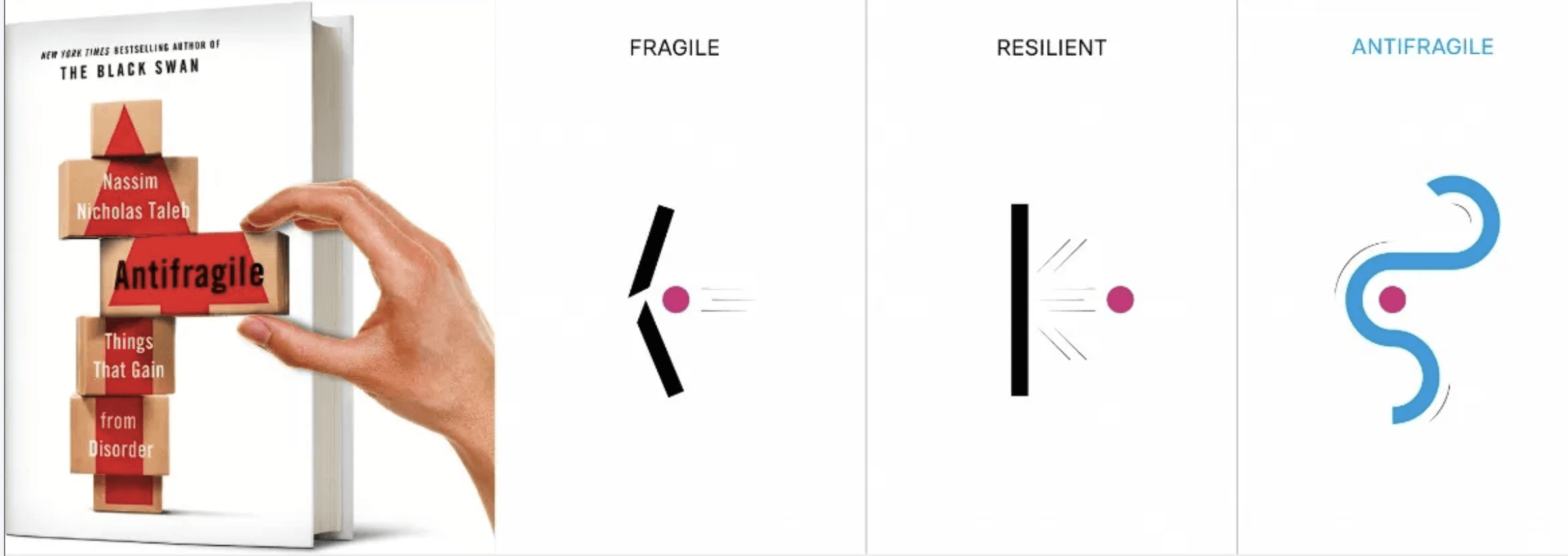
Nassim Taleb’s framework is useful here. Fragile systems break under stress. Robust systems resist it. Antifragile systems actually improve under stress. Dense knowledge networks are antifragile. The more pressure they absorb, the more connections activate, the faster problems get solved. Siloed hierarchies, by contrast, are fragile by design.
The answer to volatility is not strength. It is connectedness.
Why networks outperform hierarchies
Network science supports this. Research by Barabasi on scale-free networks has shown for decades that the most resilient and productive systems are not the ones with the strongest individual nodes, but the ones with the densest, most redundant connections between them.
Granovetter’s work on the strength of weak ties explains the mechanism. Strong ties (close collaborators within the same research group) provide depth. Weak ties (the colleague from a different department, the industry partner who uses shared equipment, someone met at a conference) provide reach. Novel information almost always travels through weak ties, because strong ties already share the same knowledge base.
For research organisations, this has a practical implication. The decision to share a piece of equipment with another lab is not just a financial decision. It is a network decision. Every shared session creates a weak tie. Every weak tie carries the possibility of a collaboration that no formal programme could have engineered.
What the most successful European ecosystems have in common
The pattern is visible across the continent’s strongest research clusters.
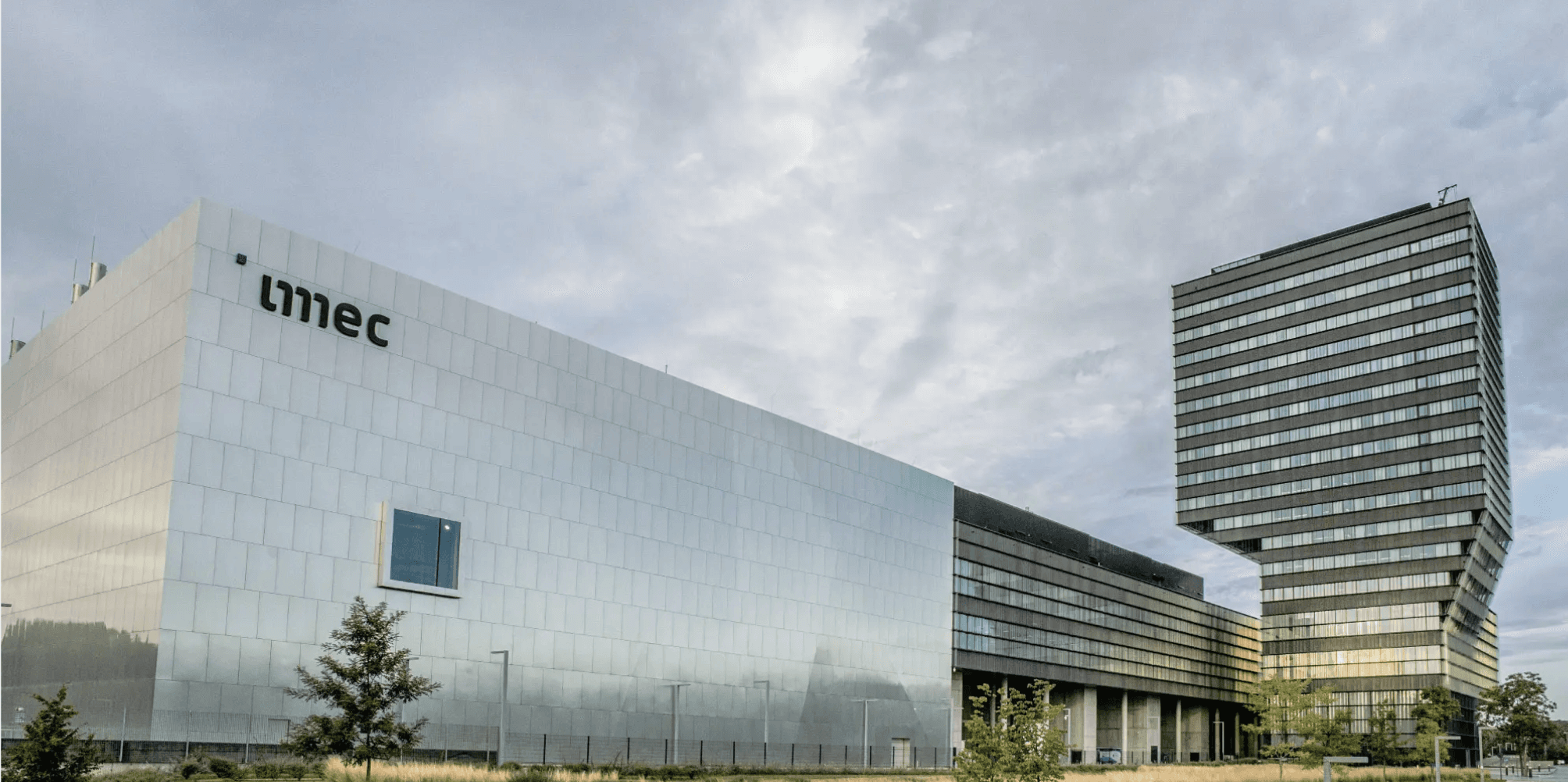
imec in Leuven functions as a knowledge hub for semiconductors and nanotech. Hundreds of industry partners co-invest in shared infrastructure none of them could afford or justify alone. No single company could build a semiconductor research facility at that level. Together, they can. The result: Leuven is now one of the most strategically important places in the global technology landscape.
Eindhoven’s Brainport region tells a similar story. After Philips decentralised in the 1990s, the region could have collapsed. Instead, the spin-off culture and shared infrastructure created a dense network of interdependent companies sharing facilities, suppliers, and knowledge. ASML, now among the most strategically critical companies in global semiconductors, grew in this ecosystem. It did not happen despite the sharing. It happened because of it.
VIB (Flanders Institute for Biotechnology) operates as a deliberate bridge between five Flemish universities and the biotech industry. Around forty spin-offs, nearly €2 billion in equity raised, structured IP frameworks, and a commercialisation mandate built into the institution from day one. It works because someone engineered the conditions for collaboration rather than leaving it to chance.
These are not coincidences. They are the predictable output of ecosystems that chose access over ownership and connection over protection.
Physical infrastructure drives knowledge circulation
The physical layout of a research facility is a knowledge management decision. Where shared equipment is located determines who encounters whom. MIT's Building 20, a temporary structure built during the Second World War, produced more scientific breakthroughs per square metre than almost any building in history, not because of the equipment inside, but because the layout forced accidental collisions between people who would never have met otherwise.
For shared labs, co-working campuses, and pilot facilities, this is the core argument. The financial case for sharing space and equipment is real. But the deeper value is knowledge circulation: proximity creates the conditions for the unexpected conversation that solves a problem no one knew they had.
The untapped potential of universities
The gap between what universities could offer and what they actually deliver to the broader research ecosystem is one of the most underexploited opportunities available.
Universities provide what no other institution can. Time: companies optimise in quarters, but universities can work on a problem for a decade. Intellectual diversity: economists, psychologists, engineers, and ethicists in the same building, which matters because the most important innovation problems are not single-discipline problems. Credibility and neutrality: findings from a university carry different weight than findings from a company with a commercial interest. And talent at the source: PhD researchers and postdocs who can embed in industry projects and bring their networks with them.
The models that deliver results are well documented. Embedded researchers splitting time between the lab and an industry partner. Shared infrastructure where universities and companies give each other access to capital-intensive equipment. Living labs where a factory floor or hospital ward becomes a research site.
The missing piece: operational discipline
This is where the collaboration narrative usually stops. The vision is compelling. The examples are inspiring. But collaboration without operational discipline is a vision that exhausts itself.
The reality in most research environments: equipment sits idle while other teams queue for access. Labs run at low utilisation while budgets fund new purchases that duplicate existing capacity. Researchers spend disproportionate time on compliance paperwork, reporting, and manual administration instead of on the research itself.
Organisations cannot sustain collaboration if their operations are consuming the people and resources meant to enable it. Efficiency is not the enemy of collaboration. It is the precondition.
When equipment use is tracked automatically, when access is enforced by training status rather than by a lab manager’s physical presence, when utilisation data is visible across departments and cost allocation happens without manual intervention, the friction that kills collaboration drops away. Sharing becomes possible because both sides have an objective record. Investment decisions move from gut feeling to data. Compliance is built into the daily workflow rather than reconstructed from paper logbooks before every audit.
Building the foundation
Toolsquare was built on the premise that research facilities can work like the best maker spaces: environments where sharing equipment and knowledge is the default, not the exception. The difference is that research environments operate at higher stakes, with stricter compliance requirements, more expensive equipment, and more stakeholders.
That complexity is not a reason to avoid sharing. It is a reason to build the operational infrastructure that makes sharing safe, accountable, and data-driven: booking, access control, utilisation reporting, cost attribution, and maintenance tracking in a single platform.
Organisations like imec, argenx, and TU Delft rely on Toolsquare because operational visibility changed how they make decisions. Not because they adopted new processes, but because they gained access to data they never had before.
The organisations and ecosystems that build collaborative infrastructure now will have a structural advantage that compounds. The ones that wait for stability before investing in collaboration will wait a long time. The infrastructure being built or neglected today is the starting condition for the next generation of researchers. That is a meaningful responsibility.